Weight Management With Bella: What I Changed and Could Not Measure
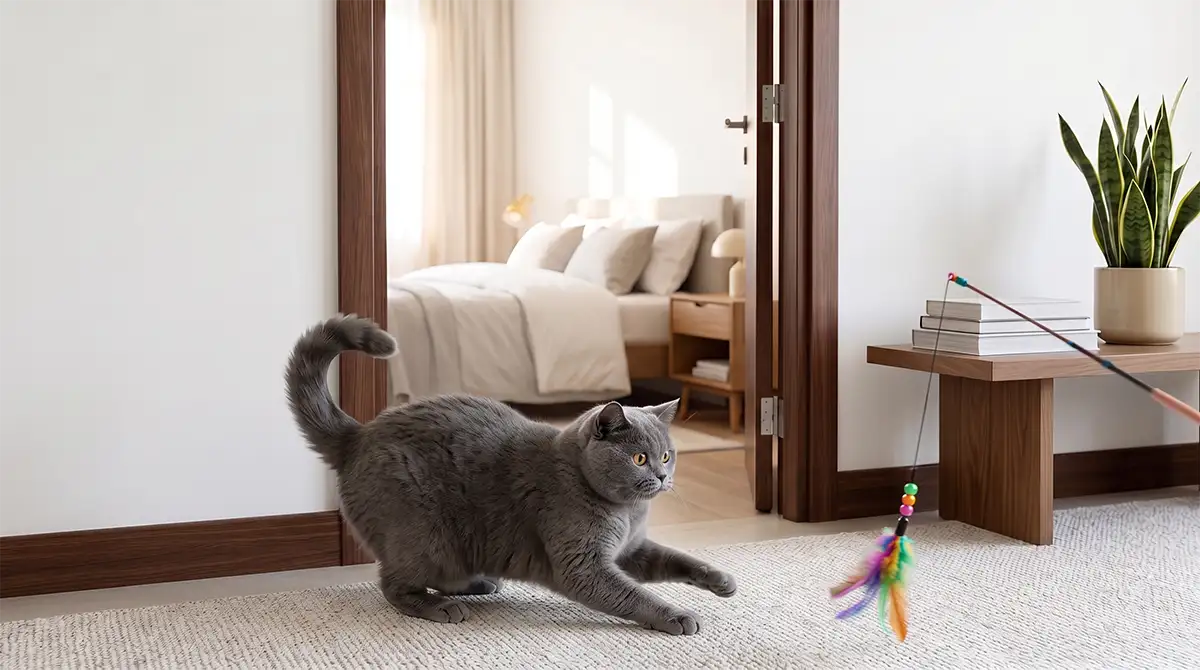
Bella was about six months old when I adopted her. As she grew, I noticed her getting rounder, but I cannot reconstruct a reliable starting weight or the date of the checkup that made me take notice.
I had assumed her round shape was simply part of being a British Shorthair. That assumption made it easy to overlook changes in her body condition.
The Alarm Bells Ring: A Checkup Shatters My Assumptions
I remember feeling alarmed when Bella was weighed at the clinic. I no longer have a dated record that can support the exact figure or show how it compares with earlier measurements.
I remember discussing Bella’s body condition at the clinic, but do not have the assessment to quote a target. A breed-wide target of 4–5 kilograms is not appropriate: an individual target depends on body condition, muscle condition and frame. AAHA’s weight-management guidance calls for an individual plan and monitoring.
I stopped using the breed’s round appearance as a guide and began paying attention to portions, play and body condition. I cannot reconstruct a veterinary calorie prescription or a daily progress log from the records I have.
The useful change for me was learning to ask whether her routine suited her body condition, rather than relying on how a British Shorthair should look.
Method 1: A Slow-Feeding Bowl to Break the Habit of Gulping Food
I chose a slow-feeding bowl with raised dividers. Bella came over to sniff it as soon as I opened the package.
The dividers spread out her food, so she had to work around them instead of gulping from one pile.
At first she paced around the bowl and scraped its rim. I watched to make sure she could still eat comfortably.
She gradually accepted it and seemed to eat more slowly. A slow feeder does not reduce calories on its own; check that the cat can comfortably eat enough.
Method 2: Establish a Fixed Daily Play Schedule to Awaken Her Lazy Instincts for Exercise
Simply adjusting her eating habits wasn’t enough.
When I worked at my desk, Bella often slept at my feet. I realised I was rarely inviting her to play.
I made time for short play sessions around work. The exact durations in my old account are inconsistent, so they are not a schedule to copy. Play should be voluntary and suited to the cat’s fitness, with rest.
Morning Playtime
I moved around the coffee table with a feather teaser. I remember Bella panting and making the mistake of trying to keep her moving. Stop play if a cat pants or struggles to breathe and contact the vet immediately. Cats Protection lists breathing difficulty as an emergency warning sign.
Evening Playtime
Instead of rushing to turn on my computer and start working, I’d take out a laser pointer and slowly draw circles on the floor, watching her chase the beam all the way from the entryway to the balcony.
Bedtime Playtime
I’d bring out a plush ball for another short game before bed.
I enjoyed seeing her engage with play again. That observation is more reliable than a claim that she burned a measured amount of energy.
Method 3: Precise Calorie Control—Say Goodbye to Unlimited Refills and Casual Snacking
The hardest part of the entire weight-loss plan to stick to was calorie control.
I used to leave her bowl full and offer treats without thinking about the whole day’s food. I began portioning meals, but I cannot reproduce a veterinary calorie target without the plan.
I used a kitchen scale to portion food into the slow-feeding bowl and included treats in the daily allowance. Another cat’s portions would need its own veterinary assessment; rewards should not depend on forcing exercise.
The Toughest Nights: Resisting the Urge to Be Soft-Hearted and Sticking to the Rules
During the weight-loss period, I wavered more than once. The moment that stands out most clearly was one early morning. I was writing an in-depth article when Bella snuggled up against my wrist, constantly nuzzling me with her head, her gaze fixed firmly on the snack cabinet. My hand had already reached for the cabinet handle—I almost gave in.
I paused before giving her another snack and offered a toy instead. That moment made me notice how easily I used food when she came looking for attention.
What I Could See, and What I Cannot Measure
Bella seemed more willing to play as our routine changed. I cannot support a specific starting or ending weight, rate of loss or follow-up result without dated records. A vet should monitor weight, intake and body condition during any loss plan. What stayed with me was the need to look beyond a round silhouette and pay attention to Bella as an individual.
Frequently Asked Questions
Q: British Shorthairs are naturally prone to weight gain. Can they be allowed to eat freely all the time?
A: Breed alone does not set calorie needs. Measure the total daily food and treats, monitor body condition, and ask the vet to adjust portions for the individual cat rather than constantly topping up the bowl.
Q: Is it better for a cat to lose weight as quickly as possible?
A: Avoid crash diets or fasting. Cats that stop eating are at risk of serious illness, including hepatic lipidosis. Contact the vet promptly if intake falls rather than making the restriction stricter. Cornell explains hepatic lipidosis.
Q: Can my cat lose weight just by eating less, or do I still need to play with them every day?
A: A nutritionally adequate calorie plan is central to weight loss; suitable play supports activity and wellbeing. Do not just cut an arbitrary amount from the bowl or push an unfit cat to exercise. The plan needs to preserve essential nutrients while reducing excess calories, as explained in AAHA’s guidance on weight-loss diets.