Can Cats Recognize Their Names? I Did an Experiment
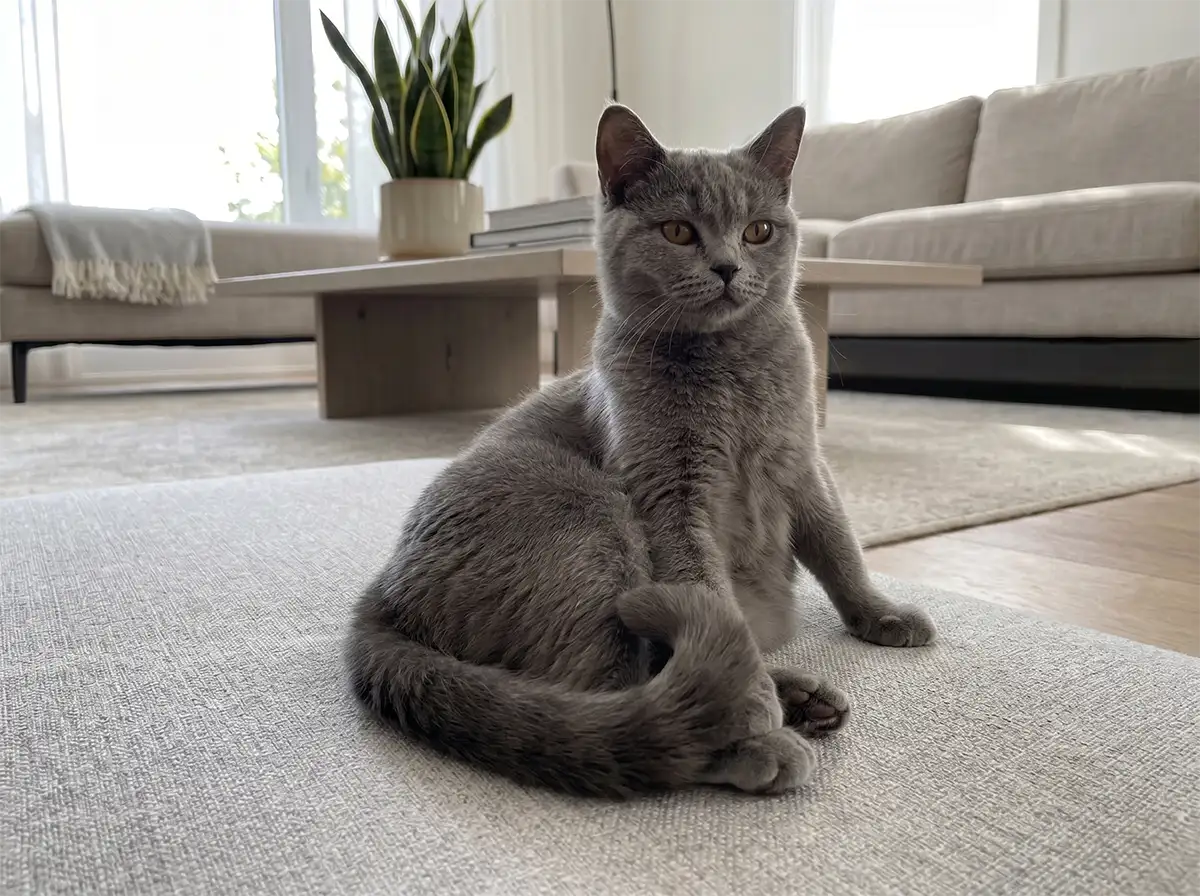
I always wondered.
Does Bella know her name? Or does she just respond to my voice?
I asked my friends. Some said yes. Some said no.
I searched online. A 2019 study tested name discrimination where cats lived, including homes and a cat café. My living-room observations would still be much less controlled.
So I decided to test it myself.
Over about a week, I tried calling Bella and four comparison words. The test and video are real, but these written notes are not a blind or complete scoring of every response.
Here is what I did. What happened. And what I learned.
Before the Experiment: My Hypothesis
I thought Bella probably knew her name.
Not because she is smart. Because she ignores me in specific ways.
When I say “Bella,” she sometimes looks at me. Sometimes flicks her ear. Sometimes walks away.
When I say random things — “chair,” “window,” “toaster” — she does nothing.
That was my guess. But I wanted proof.
How I Set Up the Test
I read a few studies online. They used a simple method.
The 2019 study used habituation and dishabituation: four control words were played first, then the cat’s name. The researchers assessed renewed responses after habituation; this is different from repeating each word on a separate day.
I adapted that for my flat.
The rules I made for myself
Same time of day. 7 PM. Before dinner. Bella is usually awake then.
Same voice. Neutral. Not excited. Not high-pitched.
Same distance. Three metres away. Not too close. Not too far.
Same position. I sat on the floor. Bella could be anywhere in the room.
No treats during the test. I wanted her reaction to the word. Not to food.
The words I chose
I picked four comparison words or phrases, aiming for two syllables. They were not acoustically matched controls like the recorded stimuli in the study.
- “Bella” (her name)
- “Bello” (fake name. One letter different)
- “Jella” (fake name. Different first letter)
- “Bed time” (different sounds. Same rhythm)
- “Window” (completely different)
My notes describe one word per session on different days, with up to five calls in each. I use “session” for a day and “call” for a spoken word below. I cannot verify the full schedule from the written notes alone.
How I measured response
I watched for three things:
- Ear movement. Flicking toward me.
- Head turn. Looking in my direction.
- Body movement. Walking toward me. Or moving away.
If she did nothing — no ear flick, no head turn, no movement — that counted as no response.
Trial 1: The Control Word “Window”
Day one. I sat on the floor. Bella was on her cat tree. Looking out the window.
I said: “Window.”
Nothing. No ear flick. No head turn. She kept watching the birds.
I waited 30 seconds. Said it again. “Window.”
Nothing.
I said it five times. Five different minutes. Same result.
She did not care at all.
My note: No visible response to this word in this session. That does not establish that she ignores all unfamiliar words.
Trial 2: The Similar Word “Bello”
Day two. Bella was on the sofa. Curled up. Eyes half closed.
I said: “Bello.”
Her ear flicked. Just once. Then nothing.
I waited. Said it again. “Bello.”
Another ear flick. But no head turn.
Third time. “Bello.”
She turned her head. Looked at me for two seconds. Then looked away.
Fourth and fifth times. No response. She went back to half-sleep.
My notes: two ear flicks and one head turn across the calls described; those movements do not give a validated success rate.
My note: I noticed some small movements. I could not tell what she thought the sound meant.
Trial 3: The Different Word “Jella”
Day three. Bella was on the floor. Near her water bowl. Drinking.
I waited until she finished. Then I said: “Jella.”
No response.
I said it again. “Jella.”
She lifted her head. Looked around. Not at me. Just around the room.
Third time. “Jella.”
She blinked. Then walked to her cat tree. Ignored me completely.
My notes: one head lift, without a direct look or ear flick toward me. I wrote down only three calls in this session, so I cannot fill in two more from memory.
My note: A head lift occurred, but that alone did not tell me whether she distinguished the word.
Trial 4: The Rhythm Match “Bed Time”
Day four. Bella was sitting by the window. Tail twitching. Watching pigeons.
I said: “Bed time.”
Nothing.
I said it again. “Bed time.”
Her ear flicked. Toward me. Just once.
Third time. “Bed time.”
She turned her head. Looked at me for one second. Then back to the pigeons.
Fourth and fifth times. No response.
My notes: one ear flick and one head turn among the calls I described.
My note: There were some responses. I had not isolated rhythm from other sound differences.
Trial 5: Her Real Name “Bella”
Day five. Bella was under the sofa. Hiding. She had heard a loud delivery noise earlier.
I sat on the floor. Three metres away.
I said: “Bella.”
She stopped moving. I could see her tail stop twitching.
I said it again. “Bella.”
Her head appeared from under the sofa. She looked at me. Eyes wide.
Third time. “Bella.”
She came out. Walked toward me. Stopped one metre away. Sat down. Looked at me.
Fourth time. “Bella.”
She blinked slowly. Did not come closer. But did not leave.
Fifth time. “Bella.”
She tilted her head. Then walked to her food bowl. Ate a few bites. Looked back at me.
My notes: the five calls prompted different visible movements, from a pause to an approach. I cannot count each as the same type of response.
My note: This looked different to me, but the word, day and situation changed together. I could not separate their effects.
The Results Table
My notes mix different movements: a lifted head, an ear flick and an approach are not the same response. I have not rescored the video using one definition, so I cannot give a reliable success percentage. The table stays with the movements I actually wrote down.
| Word | What my notes describe | What the notes cannot settle |
|---|---|---|
| Window | No obvious movement in five calls | I was watching Bella while she watched birds. |
| Bello | Two ear flicks and one head turn | Small movements do not establish which sound she recognised. |
| Jella | One head lift in three described calls | Two further calls are not documented in the text. |
| Bed time | One ear flick and one head turn | Rhythm was not isolated from other sound differences. |
| Bella | A pause, looking out, approaching, blinking and a head tilt across five calls | The delivery noise and hiding made this session different. |
What I Learned
I suspect the sound “Bella” is familiar and meaningful to her, perhaps through its association with attention, food or play. My observations cannot establish what she understands about identity or prove a reliable difference between words.
But the response is not always obvious.
Ear flicks are observations, not proof
Cats use small movements. You have to watch closely.
A flick of the ear. A pause in grooming. A slight head turn.
I read those small movements as possible attention, but an ear flick alone cannot demonstrate name recognition. Recognising a sound and choosing to approach are different things.
Context could affect the response
The name session happened after a delivery noise, with Bella under the sofa. She came out only after the third call. I cannot separate the word from her changing comfort level or the time of day.
Voice and tone were not controlled comparisons
I had the impression that Bella reacted differently to a high-pitched voice, but I did not run a matched tone test. It cannot explain the five word sessions.
One More Test: Different Person
After the main experiment, I did a small follow-up.
I asked my friend to call Bella. Same words. Same distance.
My friend said “Bella” five times.
Bella responded. Ear flicks. Head turns.
But less than when I called her.
She looked at my friend. Then looked at me. Then went back to sleep.
My impression: She reacted differently when my friend called. Without comparable trials, that cannot separate familiarity with the speaker from the word or the situation.
That makes sense. I feed her. I clean her box. I am her person.
The Struggles I Did Not Expect
Struggle 1: Getting her to stay still
Bella moves around. A lot.
I first imagined doing everything in one day. Bella walked away during an early attempt, so I spread the word sessions over several days. A cat’s choice to leave is a reason to stop, not a failed score.
Struggle 2: The delivery noise
On day five, a loud delivery happened right before my test.
Bella hid under the sofa. I almost postponed the test.
I decided to try anyway. Looking back, a frightened cat should be allowed to settle rather than encouraged out for a test; fear also makes this session hard to compare with the others.
The results from day five were different from other days. She was more cautious. But she still responded.
Struggle 3: Ignoring my own bias
I wanted Bella to know her name. So I had to be careful.
I did not want to see responses that were not there.
That is why I made the rules. Same voice. Same distance. No treats.
I also recorded video. Watched it back. Counted responses slowly.
Video helped me review what happened, but I knew which word I had said. My scoring was not blind, and I have not reconciled every written count against the video here.
What the Science Says (Briefly)
I looked up studies after my experiment.
Saito and colleagues’ 2019 study comprised four experiments with overlapping samples: 16, 34, 29 and 33 cats. These are not independent totals to add together.
Recordings presented four control words before the cat’s name, with 15-second gaps. The tests took place where the cats lived. Among cats that habituated, the researchers tested whether responses increased to the name.
The results supported discrimination of names from general nouns, including with unfamiliar speakers in Experiment 4. The café group did not show the household cats’ discrimination of their own name from cohabiting cats’ names.
This is evidence about sound discrimination, not proof of a human-like sense of identity, deliberate refusal to obey, or Bella’s individual performance. The stranger-voice result was part of the same paper, not an unnamed second study.
Practical Advice for Cat Owners
If you are curious, you can make a few gentle observations at home. This is not a validated test; stop if the cat is tired, frightened or uninterested.
What you need
- A quiet room
- Your cat
- A list of similar words
- Patience
Steps
Pick a time when your cat is relaxed. Not eating. Not playing. Not sleeping deeply.
Stand or sit three metres away.
Say one word in a neutral voice; note what you said and when.
Watch for small responses. Ear flick. Head turn. Pause in grooming.
If you try another word, note the context too. One home sequence cannot establish the research result.
Do not use treats during the test. Treats change the behavior.
What to look for
Small movements matter more than big ones.
A lack of visible response does not prove a lack of recognition. An ear flick is not proof either.
Neither cats nor dogs are guaranteed to approach when called; a home observation cannot reveal exactly what they understood.
How to Teach Your Cat Their Name (If They Do Not Know)
An apparent lack of response does not prove that a cat does not recognise the sound. You can still build a positive association with a name through brief, voluntary practice.
Method
Say the cat’s name.
Immediately give a treat.
Wait a few seconds.
Repeat.
Keep sessions brief and voluntary. There is no guaranteed ten-repetitions-a-day, one-week result. Count food rewards within the daily allowance, and stop when the cat loses interest.
What I did with Bella
Bella seemed to respond to her name when she came from the shelter. I took that as familiarity, not proof of what she understood.
But I reinforced it.
I say her name before giving dinner. Before opening a Churu. Before a play session.
I hope that makes hearing her name pleasant. I cannot measure the strength of that association from these notes.
Final Answer: Yes, But
Can cats recognize their names?
The research supports cats’ ability to distinguish familiar names from other sounds. My informal observations are consistent with that possibility for Bella, but the unbalanced sessions cannot prove it for her.
A visible response, or a lack of one, does not tell me that she is deliberately ignoring me.
Sometimes I imagine Bella deciding whether it is worth getting up. That is a joke, not a conclusion the test can support. I notice responses on some days and none on others; I cannot attach an everyday percentage to them.
A Final Thought from My Living Room
The useful lesson for me was to watch Bella without demanding an approach. The video captures a few responses; it does not tell me what she thought. I still enjoy calling her name and giving her the choice to come closer—or not.